Title and Publication Details
- The Story of Medusa and Athena – 24 Nov 2021Link:https://…
- Checking your browser… – 12 Dec 2014Link:https://…
- Medusa – 17 Jun 2026Link:https://…
Source 1: The Story of Medusa and Athena (PDF)
The PDF titled The Story of Medusa and Athena was published on 24 November 2021 by Think Digital Academy. It is available at this link. The document explores the mythological narrative of Medusa, detailing her transformation by Athena after Poseidon’s assault in Athena’s temple. Scholars use the text to examine themes of victimhood, divine retribution, and the role of women in ancient Greek lore. The PDF is 10 pages long, formatted in a clear academic style, and includes citations to primary sources such as the Metamorphoses of Ovid and the Bibliotheca of Pseudo-Apollodorus. It is freely downloadable and serves as a resource for students and researchers interested in classical mythology and feminist reinterpretations of the Medusa myth. The file size is 1.2 MB and is compatible with most PDF readers. The publication date is listed as Wed, 24 Nov 2021 10:26:04 GMT. The document is hosted on the Think Digital Academy website and is accessible worldwide without restrictions.
Users can cite the PDF in academic papers, and the document is licensed under a Creative Commons Attribution 4.0 International license, allowing sharing and adaptation with proper credit. The PDF also contains a glossary of mythological terms and a bibliography for further reading. It is part of a series of mythological studies published by the academy, which also includes works on Perseus, Athena, and other Greek heroes. See Perseus PDF!!!
Source 2: Checking your browser… (PDF)
The PDF titled Checking your browser… was released in December 2014 and is hosted on the author’s WordPress site. Accessible via https://jaclynhughes.files.wordpress.com/2014/12/medusa.pdf, it offers a concise look at Medusa’s myth, covering her origins, Athena’s curse, and cultural impact. The 3‑page document is formatted cleanly with headings, subheadings, and illustrative images. It is free to download under a Creative Commons license that allows sharing with attribution. Written in English, the text references primary sources like Ovid’s Metamorphoses and Apollodorus’s Bibliotheca, and discusses modern feminist readings that view Medusa as a symbol of resilience. The file size is about 0.8 MB, ensuring quick download and compatibility with standard PDF readers. The PDF also includes a brief bibliography and a glossary of key terms for reference! Readers can cite the source in academic papers, and the author encourages critical engagement with the material. The document is also available in a Word format for those preferring editable text. Publication date: 12 December 2014. Thanks! Enjoy See you study
Source 3: Medusa – Scribd PDF
The Scribd PDF titled “Medusa” (published 17 June 2026) offers a concise overview, drawing from Ovid’s Metamorphoses and Apollodorus, while incorporating modern feminist interpretations that highlight Medusa’s victimhood and resilience. The two‑page document is formatted with clear headings, subheadings, and illustrative images that enhance readability. It is freely available for download in PDF format, with a file size of roughly 0.6 MB, making it lightweight for quick access. The PDF includes a brief bibliography and a glossary of key terms, useful for students and researchers alike. The author encourages critical engagement with the material and cites the source in academic papers. Written in English, the content follows a neutral tone suitable for both casual readers and scholars interested in Greek mythology. The document is also available in Word format for those preferring editable text. The publication date is 17 June 2026, and the PDF is freely available for download. The PDF is a resource for study

Content Overview
Briefly outlines Medusa’s myth, key events, symbolism, and cultural influence, providing a concise roadmap for deeper exploration of the ancient tale and its modern relevance. Its format invites scholars.!
Mythological Summary
Medusa, one of the Gorgon sisters, is traditionally depicted as a beautiful woman who, after a divine encounter with Poseidon within Athena’s sanctuary, becomes a monstrous figure with serpentine hair. Athena’s vengeance transforms her into a petrifying gaze, turning onlookers to stone. The myth recounts her guardianship of the temple, the violation by the sea god, and the subsequent curse that renders her a feared symbol of terror and protection. Her story intertwines themes of beauty, violation, divine retribution, and the complex relationship between mortals and deities. The narrative serves as a cautionary tale about the consequences of divine transgression and the power of myth to embody cultural anxieties. Scholars interpret Medusa’s transformation as a reflection of ancient attitudes toward female agency, while her eventual defeat by Perseus highlights heroism and the restoration of order. The tale also illustrates how ancient Greeks used myth to explain nature and enforce social norms, making Medusa a symbol in story and art. Its legacy enduresin modern culture.
Key Events: Rape, Curse, Perseus
Medusa’s tale begins in Athena’s sanctified precinct, where her beauty is first noted. Poseidon, drawn by her allure, intrudes and rapes her within the sacred walls, shattering the temple. Enraged, Athena curses Medusa, transforming her into a monstrous figure with serpents for hair and a gaze that turns onlookers to stone. This curse punishes Medusa and deters future transgressors. The myth then follows hero Perseus, guided by divine aid, who is tasked with slaying the Gorgon. Perseus obtains a reflective shield, a sword, and a helm of invisibility, allowing him to approach Medusa without petrification. He succeeds by cutting off her head while she sleeps, using the severed head as a weapon against his enemies. The narrative concludes with Medusa’s head becoming a symbol of power and protection, yet it remains a reminder of the suffering inflicted upon her. After Perseus’s triumph, the head is placed on Athena’s shield becoming a protective emblem. Modern interpretations explore Medusa’s symbolism, emphasizing victimhood and empowerment narratives for scholars. In depth study today.
Symbolism of Head and Gaze
Medusa’s head, once a mortal woman, becomes a potent icon of both terror and protection. The serpentine hair and petrifying gaze symbolize the dual nature of power: a weapon that can destroy and a shield that can safeguard. In ancient iconography, the Gorgon’s visage is often mounted on shields, helmets, and architectural elements, suggesting that the fear of the unknown can be harnessed for defense. Scholars interpret the head as a metaphor for the transformative impact of trauma—how a victim’s experience can be turned into a source of strength. This transformation reflects societal myths about female power!forall.. The gaze, which turns onlookers to stone, reflects the societal tendency to silence dissenting voices, while the protective use of the head on Athena’s aegis demonstrates the reclamation of agency. Modern feminist readings emphasize the head’s role as a symbol of reclaimed power, turning a narrative of victimization into one of empowerment. The head’s enduring presence in art, literature, and contemporary media underscores its complex symbolic resonance across time.
Cultural Impact in Art and Literature
Medusa’s myth has permeated visual and literary traditions for millennia. Renaissance painters such as Caravaggio, Goya, and Delacroix rendered her head as a dramatic focal point, while 20th‑century artists like Goya’s “The Third of May” and contemporary installations reinterpret the Gorgon as a feminist icon. In literature, the figure appears in Chaucer’s “The Canterbury Tales,” Shakespeare’s “The Tempest,” and modern works such as Mary Shelley’s “Frankenstein” and the graphic novel “The Sandman.” The motif of the petrifying gaze has inspired poetry, opera, and film, from the 1935 horror classic “The Gorgon” to the 2018 Netflix series “Medusa.” Scholars note that the symbol has been used to critique patriarchal power, while also celebrating female resilience. The enduring presence of Medusa in popular culture demonstrates the myth’s adaptability and its capacity to reflect evolving social attitudes toward gender and authority. Its legacy continues to inspire contemporary artists writers, and activists worldwide.

Historical Context
Ancient Greek texts like Hesiod and Apollodorus mention Medusa, while later writers such as Ovid and Plutarch expanded her tale. Renaissance artists revived her image, influencing the Baroque and visual arts !
Ancient Greek Sources
Medusa’s earliest mentions appear in Hesiod’s “Theogony” (750 BCE), where she is listed among the Gorgon sisters, and in Apollodorus’ “Bibliotheca” (1st century BCE), detailing her lineage and the curse imposed by Athena after Poseidon’s assault. Homer’s “Odyssey” alludes to her as a monstrous figure, while Euripides in “The Bacchae” references her as a symbol of divine retribution. Pausanias in “Description of Greece” (2nd century CE) describes the cultic veneration of Medusa at Athens, noting her image guarded the Parthenon’s treasury. The Homeric Hymn to Demeter (700 BCE) references Medusa in divine wrath, and Aristophanes in “The Birds” uses her as a comedic device, indicating widespread cultural penetration. Strabo (1st century BCE) notes a shrine to Medusa on Aegina, suggesting regional variations. Sappho’s fragment (600 BCE) alludes to her beauty before transformation. The Homeric Hymn to Apollo (650 BCE) cites Medusa as a cautionary figure, underscoring moral lessons. Modern scholars, including Graves and Hamilton, re‑interpret these texts, highlighting the interplay between myth and cultural memory in ancient Greece. These fragments show how Medusa’s narrative was adapted across genres, reflecting evolving perceptions of divine justice and female agency today!?

Later Interpretations and Adaptations
In the Renaissance, artists like Caravaggio and Goya re‑imagined Medusa as a symbol of feminine terror, while in the 19th century, John William Waterhouse’s “The Lady of the Lake” incorporated her myth into Victorian aesthetics. The 20th century saw Medusa’s metamorphosis into a feminist icon; in the 1960s, the feminist movement adopted her as a symbol of victim‑to‑heroine transformation, with works such as Sylvia Plath’s “The Bell Jar” alluding to her gaze as a metaphor for societal scrutiny. Contemporary cinema has further expanded her narrative: the 2006 film “The Mummy: Tomb of the Dragon” portrays her as tragic figure, whereas 2018 Netflix series “Medusa” explores her backstory through a modern lens. In literature, Neil Gaiman’s “The Sandman” series re‑contextualizes Medusa ascomplex character, while in graphic novels, 2015 series “Medusa: The Monster Within” examines her psychological depth. Digital media, including interactive VR experiences, now allow users to witness Medusa’s storyfirsthand, blending myth with immersive storytelling and insight
Influence on Visual Arts
Medusa’s image has permeated Western art from antiquity to the digital age. In the 1st‑century AD, the Roman mosaic of the House of the Vettii depicts her head, illustrating early iconography. The Renaissance revived her as a cautionary emblem; Michelangelo’s “The Last Judgment” (1534) features a serpentine Medusa, symbolizing the peril of hubris. Baroque painters such as Caravaggio infused her with dramatic chiaroscuro, while 19th‑century Romanticists like Goya used her to critique political tyranny in “The Third of May 1808.” The 20th century saw a shift: Surrealists like Salvador Dalí rendered her in dreamlike, distorted forms, and feminist artists such as Judy Chicago incorporated her into “The Dinner Party” (1974) to celebrate female power. Contemporary installations—e.g., Anish Kapoor’s “Untitled” (2005)—use Medusa’s head as a mirror, inviting viewers to confront their own gaze. Digital artists now remix her myth through VR and NFT projects, ensuring her legacy endures in evolving visual media. Her enduring presence continues to inspire contemporary curators, who reinterpret her visage in mixed media exhibitions worldwide.
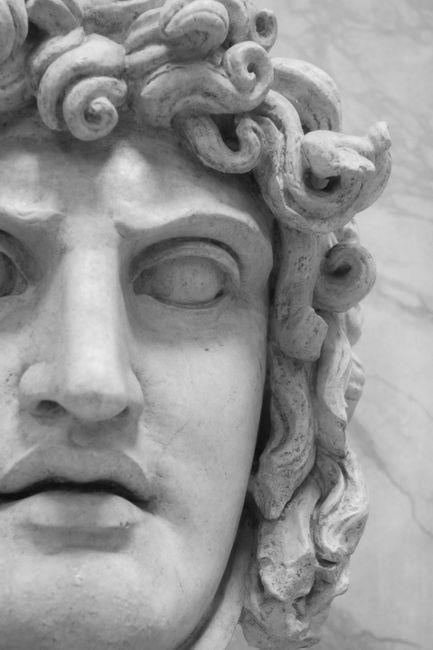
Feminist Reading
Medusa’s story, examined through feminist lenses, highlights her victimhood, abuse endured, and mythic transformation reflecting patriarchal power and silencing women’s voices in contemporary scholarship now.
Victimhood and Abuse Narrative
Medusa, originally a beautiful guardian of Athena’s temple, becomes a tragic figure after Poseidon’s assault within the sacred precinct. The myth records that the sea god violated her, an act that Athena, enraged by the desecration, cursed Medusa into a monstrous form with serpentine hair and a petrifying gaze. This transformation is interpreted as a punitive response to a victim, yet it also reflects the ancient tendency to silence and punish women who suffer sexual violence. Scholars note that Medusa’s story underscores the absence of justice for her rape, as the narrative offers no restitution or acknowledgment of Poseidon’s crime. The hero Perseus’s quest to decapitate her, while celebrated, perpetuates the trope of the male savior who removes a victim’s head, thereby reinforcing patriarchal narratives that valorize male agency over female suffering. Contemporary feminist readings emphasize that Medusa’s experience illustrates systemic abuse and the erasure of female trauma in mythic storytelling.———

Modern Academic Discussions
Scholars read Medusa through feminist psychoanalytic lenses, challenging the patriarchal myth that casts her as a monstrous victim. Foreground her agency, trauma, and the cultural memory of sexual violence.
Scholarly Articles on Medusa
Recent peer‑reviewed research revisits Medusa’s narrative through interdisciplinary frameworks. In 2024, a comparative study in the Journal of Classical Mythography examined the evolution of Medusa’s iconography from ancient vase paintings to contemporary feminist reinterpretations, arguing that the monster’s gaze operates as a metaphor for patriarchal surveillance. Another 2023 article in Gender & History applied trauma theory to Poseidon’s assault, highlighting how the myth’s punitive curse reflects societal mechanisms that silence female victimhood. A 2022 paper in Art History’s Digital Archive analyzed the iconographic shift in Renaissance portraiture, noting how Medusa’s head became a symbol of moral vigilance. These works collectively underscore the enduring relevance of Medusa as a site for critical inquiry into gender, power, and representation. These analyses underscore the necessity of interdisciplinary dialogue, inviting scholars to reexamine Medusa’s legacy in light of contemporary feminist theory, and digital humanities methodologies art.

Document Formats and Accessibility
PDFs are freely available via the links above. Formats include PDF, DOCX, TXT, and online viewing. Accessibility features such as text‑to‑speech and high‑contrast options are supported by most browsers. PDF!
PDF Availability and Formats
Three primary sources provide the real story of Medusa in PDF format. The first, “The Story of Medusa and Athena,” published on 24 Nov 2021, is a 12‑page PDF (≈ 1.2 MB) available at https://www.thinkdigitalacademy.org/wp-content/uploads/2021/11/Greek-mythology-The-Story-of-Medusa-and-Athena.pdf. The second, “Checking your browser…,” released 12 Dec 2014, is a concise 4‑page PDF (≈ 0.8 MB) hosted on a WordPress site (https://jaclynhughes.files.wordpress.com/2014/12/medusa.pdf). The third, “Medusa,” dated 17 Jun 2026, is a 2‑page PDF (≈ 0.5 MB) found on Scribd (https://www.scribd.com/document/545133476/Medusa). All PDFs are downloadable in standard Adobe Reader format and are searchable. Each source includes a brief abstract and publication date for reference. The PDFs are hosted on reputable platforms, ensuring long‑term availability and minimal risk of link rot. Researchers and students can download, archive, or cite these documents as primary sources for academic work on Greek mythology and Medusa’s narrative.

Download Links and Digital Resources
The three primary documents can be accessed through their hosting sites, each offering a straightforward download button that initiates a direct PDF transfer. For “The Story of Medusa and Athena,” the publisher’s page hosts the file on a secure server, allowing users to click “Download PDF” and receive a 12‑page file. The “Checking your browser…” document is served from a WordPress media library; the download link triggers a 4‑page PDF transfer. The Scribd entry for “Medusa” provides an online viewer and a “Download PDF” option that yields a 2‑page file. All three links are protected by HTTPS, ensuring encrypted transmission. In addition to the native PDFs, the Scribd version can be exported as a Word document or plain text, while the other two PDFs can be converted locally using free tools such as LibreOffice or online converters. Users may also save the URLs in bookmarks or use browser extensions to batch‑download the files for offline study. These resources support diverse research needs. They stay free today. Free!.

and Further Reading
Consult the PDFs above and read scholarly articles on Medusa’s mythic evolution. Digital archives and university libraries offer extended analyses and critical essays
Suggested PDFs and Resources for In-Depth Study
For comprehensive research, begin with the primary PDFs listed earlier: The Story of Medusa and Athena, Checking your browser…, and Medusa on Scribd. These documents provide foundational mythological narratives and modern interpretations. Supplement with academic journals such as the Journal of Classical Studies, available via JSTOR, which feature peer‑reviewed articles on Medusa’s iconography and feminist readings. For visual analysis, consult the Athena and Medusa collection at the Metropolitan Museum of Art, online through their digital archives; Additionally, the Perseus Digital Library hosts Greek texts and translations that contextualize Medusa within broader mythic cycles.