Ground Guide Signaling: An Overview
Ground guide signaling ensures rail safety, utilizing systems like ATP and ABS to prevent collisions and manage train movements effectively.
Historical Context of Ground Signals
Initially, railway signaling relied heavily on human observation and simple mechanical devices. Semaphore signals, employing arms and flags, were the earliest forms of ground signaling, demanding clear visibility and skilled interpretation by train operators.
As rail networks expanded and train speeds increased, the limitations of semaphore systems became apparent, necessitating more reliable and automated solutions. The evolution towards color light signals marked a significant advancement, enhancing clarity and reducing the potential for miscommunication.
These early systems laid the foundation for modern ground signaling, continually refined with the integration of automatic train protection (ATP) and automatic block signaling (ABS) technologies to bolster safety and efficiency.
Evolution from Semaphore to Color Light Signals
The transition from semaphore to color light signals represented a pivotal moment in railway safety; Semaphore arms, susceptible to visibility issues – particularly in adverse weather – proved increasingly inadequate for growing rail traffic demands.
Color light signals offered a standardized and easily recognizable system, utilizing red, yellow, and green aspects to convey clear instructions to train operators, minimizing ambiguity. This shift dramatically reduced reliance on subjective interpretation.
Further advancements incorporated automatic features, enhancing reliability and paving the way for integration with ATP systems, ultimately improving overall network safety and operational efficiency.
Types of Ground Signals
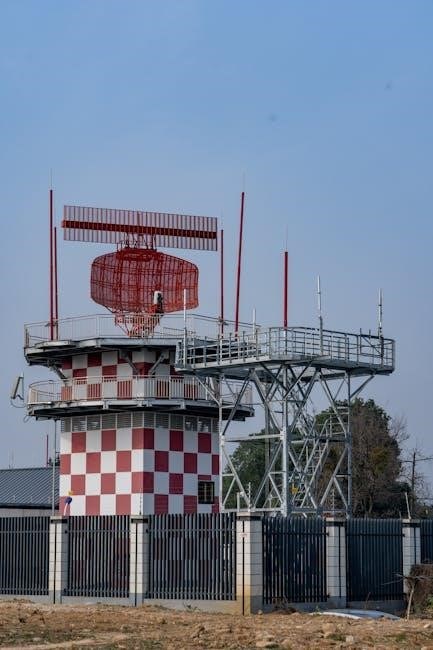
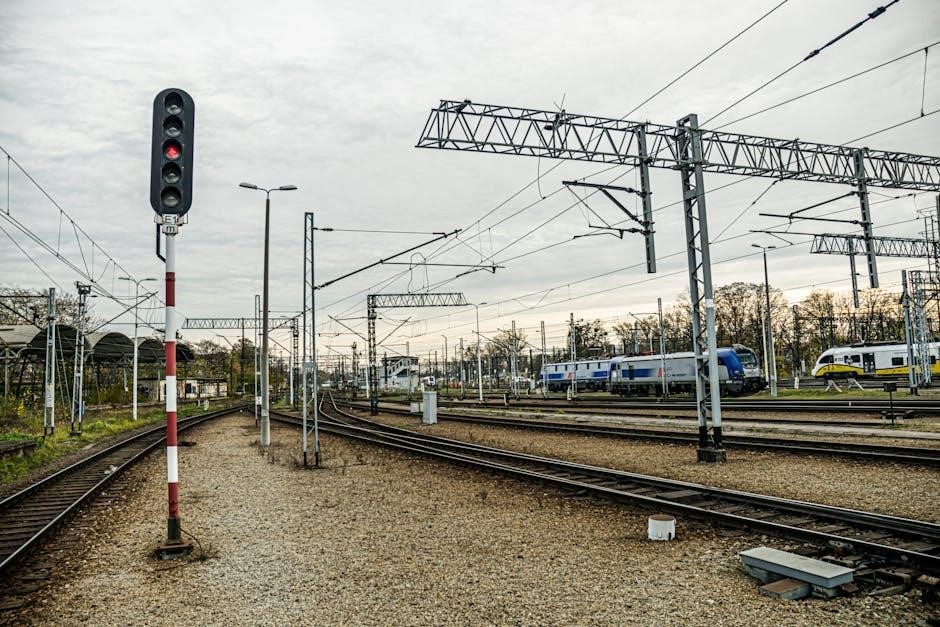
Various ground signals – distant, home, and intermediate – work in concert to regulate train movements, providing warnings and controlling access to track sections.
Distant Signals: Providing Advance Warning
Distant signals are crucial for alerting train operators about the state of the signals ahead, typically located a significant distance before the home signal. These signals don’t directly permit entry into a section but prepare the driver for potential actions.
A favorable indication on a distant signal indicates that the following home signal is likely to display a proceed aspect, allowing the train to continue at its current speed. Conversely, a restrictive signal necessitates speed reduction or even a stop before reaching the next signal.
This advance warning is vital for safe train operation, enabling drivers to react appropriately and avoid unexpected braking or potential collisions, enhancing overall railway safety.
Home Signals: Controlling Entry to Sections
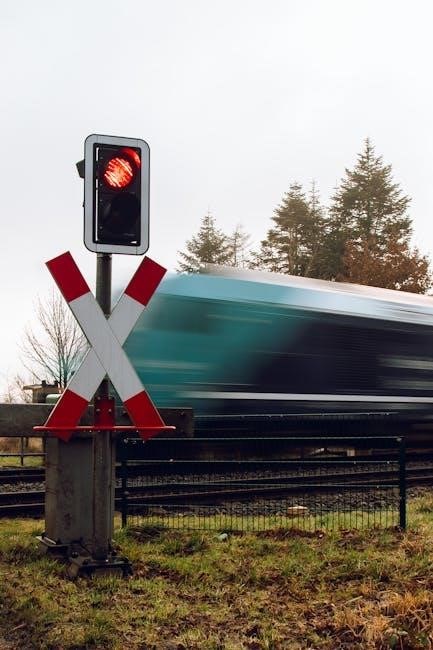
Home signals are the primary gatekeepers, directly governing a train’s entry into a specific track section or block. Unlike distant signals, a home signal’s aspect – its color and arrangement – definitively authorizes or prohibits movement.
A ‘proceed’ aspect allows immediate entry, while a ‘stop’ signal mandates a complete halt before the signal. Intermediate aspects may require reduced speed or preparation to stop. Disregarding a home signal, as tragically seen in recent collisions, has severe consequences.
These signals are integral to block signaling, ensuring only one train occupies a section at a time, preventing rear-end collisions and maintaining safe railway operations.
Intermediate Signals: Managing Block Sections
Intermediate signals refine block section management, positioned between home and distant signals. They don’t directly permit entry like home signals, but provide crucial advance information about the status of the upcoming home signal.
Aspects indicate whether the following home signal displays ‘proceed’ or ‘stop’, allowing drivers to adjust speed proactively. Malfunctions, potentially caused by weather like recent incidents, can disrupt this flow.
These signals enhance capacity by allowing closer train spacing within a block, while maintaining safety through informed speed control and preparation for potential stops.

Components of a Ground Signal System
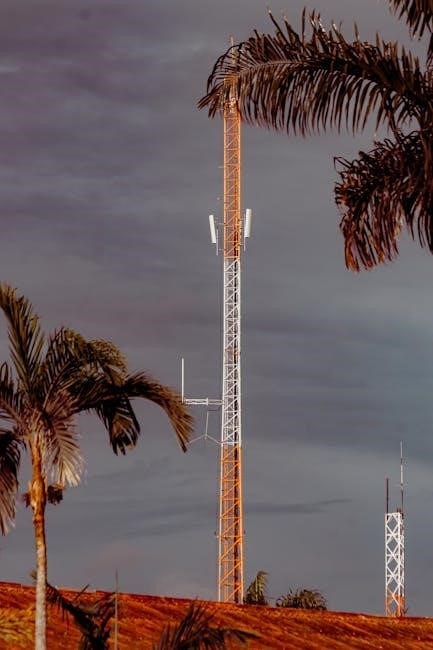
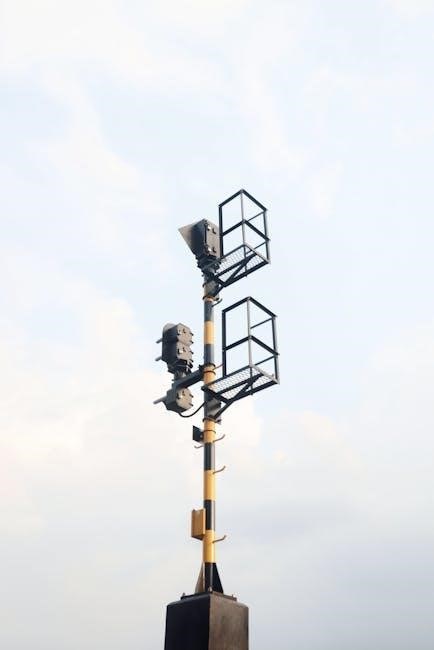
Essential components include signal posts, lamps, lenses, and intricate mechanisms – all working in harmony to reliably convey instructions to train operators.
Signal Posts and Structures
Signal posts are the foundational elements, strategically positioned alongside the railway tracks to display signals clearly to approaching train drivers. These structures, historically constructed from wood, are increasingly built using steel or concrete for enhanced durability and resistance to environmental factors like harsh weather.
Their height and placement are carefully calculated to ensure unobstructed visibility, even under challenging conditions. The structures must withstand significant stress from wind and potential impacts. Modern designs often incorporate corrosion-resistant materials and protective coatings to extend their lifespan and minimize maintenance requirements, contributing to overall system reliability.
Signal Lamps and Lenses
Signal lamps, the light sources within ground signals, have evolved significantly. Early systems utilized oil lamps, transitioning to incandescent bulbs, and now predominantly employ long-lasting, energy-efficient LEDs. Lenses, crucial for signal clarity, focus and color-code the emitted light.
Red typically indicates ‘stop’, while green signifies ‘proceed’. These lenses are designed for high visibility, even in adverse weather conditions like rain or fog. Modern lenses utilize specialized materials to maximize light transmission and minimize glare, ensuring drivers can accurately interpret signal indications for safe train operation.
Signal Mechanisms and Linkages
Signal mechanisms are the intricate systems translating control commands into visible signal aspects. Historically, these were mechanical linkages – rods and levers – operated manually by signalmen. Modern systems increasingly utilize electrical and electromechanical components for remote control and automation.
Linkages connect the signal mechanism to the signal lamps, precisely positioning the lenses to display the correct indication. Reliability is paramount; failures can lead to misinterpreted signals and potential accidents. Regular maintenance and inspection of these mechanisms are vital for ensuring continued safe operation.
Automatic Train Protection (ATP) Systems & Ground Signals
ATP systems enhance safety by overriding signal errors, preventing collisions, and enforcing speed restrictions, working in conjunction with traditional ground signaling methods.
Integration of ATP with Traditional Signaling
Integrating ATP with existing ground signals creates a layered safety approach. Traditional signals provide initial instructions, while ATP acts as a vital backup, continuously monitoring train speed and position.
This integration ensures that even if a signal is misinterpreted or missed – as tragically seen in recent collisions where loco pilots disregarded warnings – ATP can automatically intervene.
The system verifies signal aspects, applying brakes if necessary to prevent overspeeding or signal passing at danger, significantly reducing the risk of derailments and collisions. This synergy enhances overall rail network reliability.
Role of ATP in Overriding Signal Errors
ATP’s crucial role lies in its ability to override human error and equipment malfunctions within the signaling system. Recent incidents, like the Rangapani-Chattarhat signaling failure due to rain, highlight the need for such redundancy.
When signals malfunction or are disregarded – as evidenced by the Kanchenjunga Express collision – ATP independently assesses track conditions and train status.
It enforces speed restrictions and automatically initiates braking if a train approaches a danger signal at an unsafe speed, preventing potential disasters and bolstering overall railway safety.
Automatic Block Signaling (ABS) Systems
ABS systems, effectively integrated into rail segments like those within SECR, enhance capacity and safety by automatically managing train movements between blocks.
How ABS Operates with Ground Signals
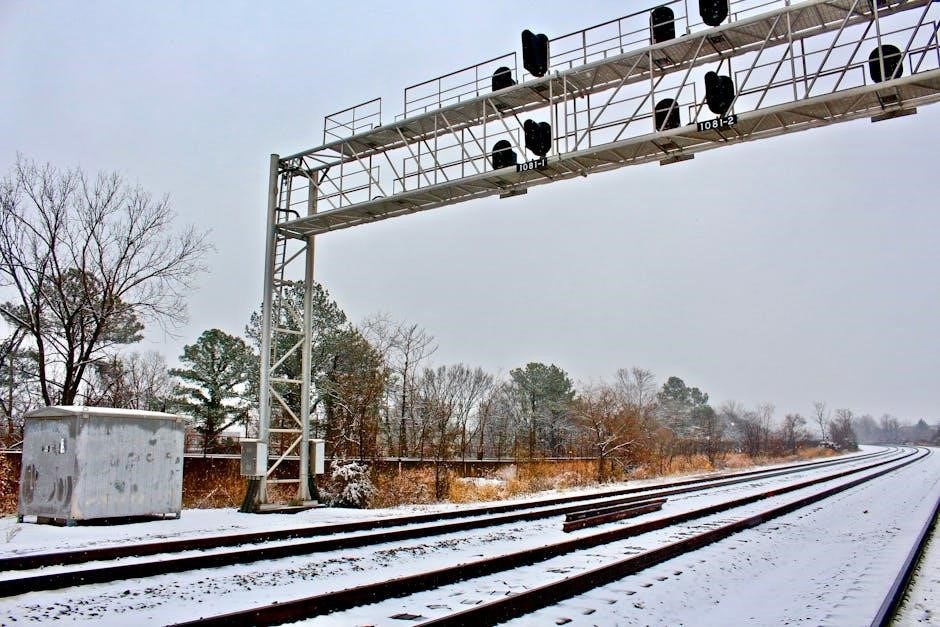
Automatic Block Signaling (ABS) intricately works with ground signals to divide a railway line into sections, or ‘blocks’. Each block is protected by signals displaying indications based on occupancy. When a block is clear, the signal shows a proceed aspect, allowing trains to enter.
Conversely, if a block is occupied, the signal displays a stop aspect, preventing entry. This system relies on track circuits detecting train presence. Malfunctions, like those experienced between Rangapani and Chattarhat due to rain, can disrupt this signaling, necessitating prompt repairs to maintain safety and prevent accidents.
Benefits of ABS for Increased Capacity
Automatic Block Signaling (ABS) significantly boosts railway capacity by allowing trains to operate closer together safely. By dividing the line into blocks and controlling access with ground signals, ABS minimizes headways – the time between successive trains.
This increased throughput is crucial for efficient rail networks. The SECR’s implementation of ABS demonstrates this benefit. However, reliable operation is paramount; signal malfunctions, as seen recently, can negate these gains and compromise safety, highlighting the need for robust maintenance.
Signal Failures and Safety Implications
Signal failures, often due to weather or maintenance issues, pose critical safety risks, potentially leading to collisions as demonstrated by recent incidents on Indian Railways.
Common Causes of Signal Malfunctions (e.g., weather, maintenance)
Ground signal malfunctions stem from diverse sources, impacting railway safety. Adverse weather conditions, particularly heavy rainfall, can disrupt signal functionality, as evidenced by the Rangapani-Chattarhat incident where a signaling system failed for over three hours. Insufficient or delayed maintenance also contributes significantly, allowing issues to escalate.
Equipment aging, power surges, and even external factors like vandalism can induce failures. Proper preventative maintenance schedules, robust weatherproofing, and swift repair responses are crucial for mitigating these risks and ensuring reliable signal operation, ultimately safeguarding train travel.

Emergency Procedures in Case of Signal Failure
Signal failures demand immediate, standardized responses to prevent accidents. When a malfunction occurs, as seen with the Rangapani-Chattarhat system, trains must be brought to a controlled stop. Communication between the loco pilot, signalman, and control center is paramount.
Loco pilots, despite potential signal disregard as highlighted in the Kanchenjunga Express collision, must adhere to strict protocols. These include reduced speed, expecting adverse signals, and potentially manual operation under control center guidance. Thorough investigation and swift repairs are vital post-incident.
Advanced Train Collision Avoidance Systems ⎻ Kavach
Kavach, a Rs 1,364 crore initiative, enhances safety by integrating with existing systems, potentially reducing reliance on traditional ground signals for collision prevention.
Kavach System: Functionality and Integration
Kavach is an indigenous automatic train protection (ATP) system designed to prevent train collisions and derailments. It utilizes radio communication to transmit vital information, including speed restrictions and signal aspects, directly to the locomotive.
This real-time data allows the system to automatically apply brakes if a loco pilot disregards a signal or exceeds the permissible speed. Integration involves equipping locomotives with Kavach devices and installing trackside infrastructure for signal transmission.
Crucially, Kavach aims to augment, not entirely replace, existing ground signaling, providing an additional layer of safety and mitigating risks associated with human error or signal malfunctions.
Impact of Kavach on Ground Signal Reliance
Kavach significantly reduces, but doesn’t eliminate, reliance on traditional ground signals. While providing an independent layer of protection against signal errors and human oversight, ground signals remain crucial for overall train operation and system redundancy.
The system enhances safety by automatically intervening when signal aspects are missed, but the initial signal information still guides train movement.
Future implementations may see a gradual shift, but currently, Kavach functions as a vital supplement, bolstering the existing signaling infrastructure rather than completely supplanting it.
Human Factors in Ground Signal Operation
Loco pilots and signalmen play critical roles; proper training, vigilance, and accurate signal recognition are paramount for safe and efficient rail operations.
Loco Pilot Responsibilities and Signal Recognition
Loco pilots bear immense responsibility for train safety, demanding strict adherence to signaling protocols. Accurate and timely signal recognition is crucial; disregarding signals, as tragically demonstrated in recent collisions, can have devastating consequences.
Pilots must comprehensively understand each signal’s meaning – distant, home, and intermediate – and react accordingly, adjusting speed or preparing to stop; Continuous training and vigilance are essential to maintain proficiency. They are the last line of defense, interpreting the system’s guidance and ensuring passenger safety through disciplined operation.
Signalman Duties and System Monitoring
Signalmen are pivotal in maintaining the integrity of ground signal systems, responsible for continuous monitoring and swift response to anomalies. Their duties encompass checking signal functionality, ensuring proper operation of linkages, and promptly addressing malfunctions – like those caused by weather events, such as recent rain-induced failures.
Proactive system monitoring, coupled with diligent maintenance, is vital. Signalmen must be prepared to implement emergency procedures in case of failures, coordinating with control centers to minimize disruption and prioritize safety. Their vigilance directly impacts the reliability of the entire network.

Future Trends in Ground Guide Signaling
Digital signaling, CBTC, and AI-driven predictive maintenance are poised to revolutionize ground guide signaling, enhancing safety and efficiency on railways.
Digital Signaling and Communication-Based Train Control (CBTC)
Digital signaling represents a significant leap forward, replacing traditional fixed block systems with continuously transmitting train positions. CBTC utilizes bidirectional communication between trackside equipment and trains, enabling precise location data and real-time adjustments to movement authorities.
This technology allows for tighter headways, increasing track capacity and improving overall network efficiency. Unlike conventional systems reliant on physical signals, CBTC displays information directly within the train cab, enhancing situational awareness for operators. The transition to digital systems promises reduced infrastructure costs and improved reliability through remote monitoring and diagnostics.
The Role of Artificial Intelligence in Predictive Maintenance
Artificial Intelligence (AI) is revolutionizing ground signal maintenance by analyzing vast datasets from signal components. AI algorithms can detect subtle anomalies indicative of impending failures, enabling proactive interventions before disruptions occur. This predictive capability minimizes downtime, reduces maintenance costs, and enhances overall system reliability.
Machine learning models can forecast component lifespan, optimize maintenance schedules, and even identify patterns linked to environmental factors like weather. By shifting from reactive to proactive maintenance, railways can significantly improve safety and operational efficiency, ensuring consistent signal functionality.